


A New Tick in Ohio
If you've been spending more time outside this spring, whether in your garden, on a trail, or just in the backyard, there's something worth knowing before you head out the door. Ohio's tick landscape is changing, and a new invasive species has quietly been making itself at home across the state.
The Asian Longhorned Tick (Haemaphysalis longicornis) is now confirmed in at least 19 Ohio counties, with OSU experts expecting it throughout central Ohio and all along the Ohio River corridor. And here's where it gets wild: females don't need a male to reproduce. A single tick can lay up to 2,000 eggs entirely on her own. No partner. No warning. Just thousands of ticks appearing seemingly out of nowhere. And while adults grow to about the size of a pea when fully engorged, the earlier life stages are barely the size of a sesame seed — small enough that most people never even notice them. They thrive in tall grass and weedy areas, which means anywhere you're working outdoors, you could encounter them. Ohioline + 2
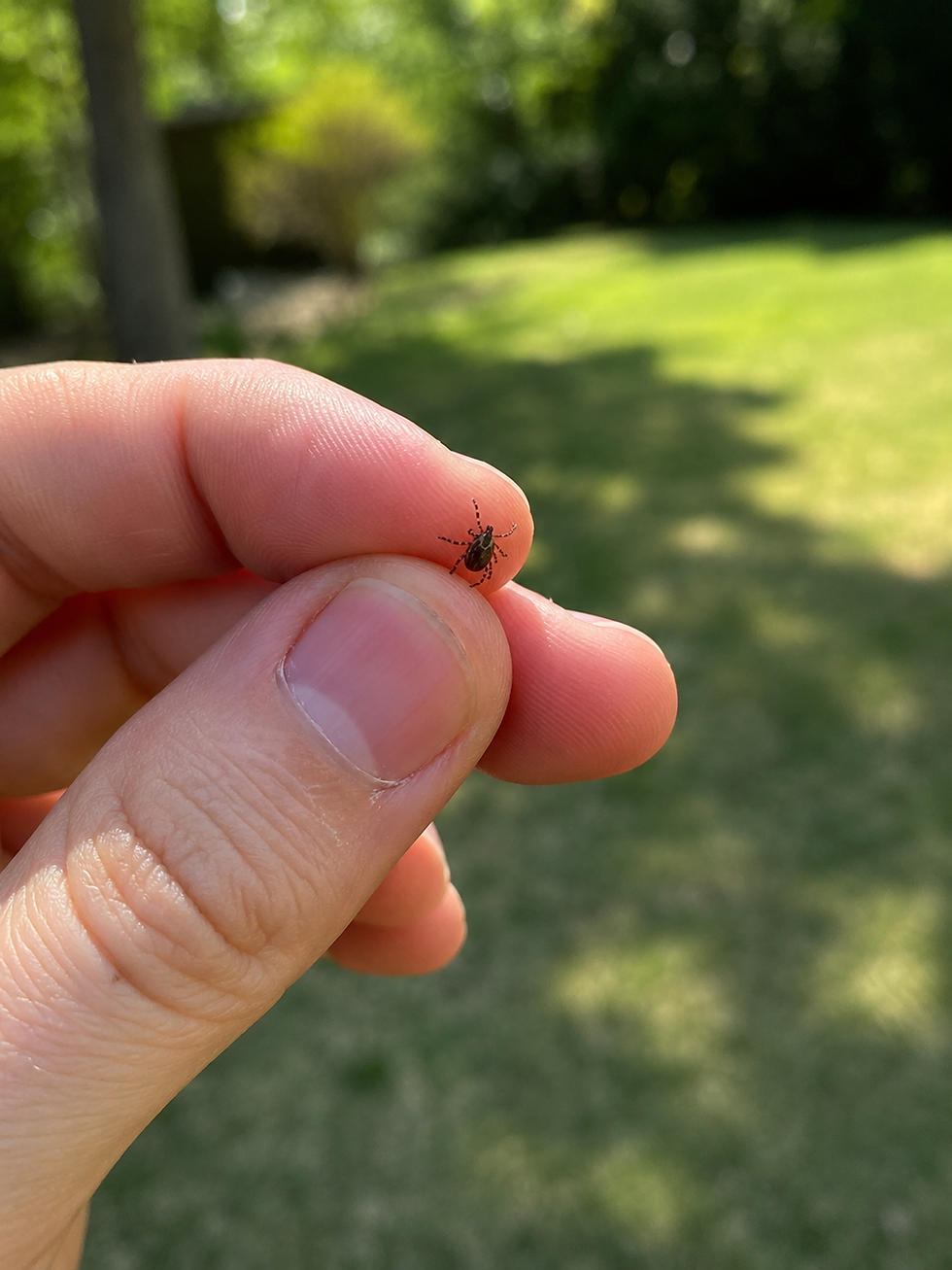
Should You Be Worried?
Cautiously aware is the right mindset but don't brush this one off. The Asian Longhorned Tick hasn't been documented transmitting disease to humans in the U.S. yet but that "yet" matters. In May 2025, scientists discovered for the first time that this tick had become a carrier for the bacterium behind Ehrlichiosis, an infection that causes fever, chills, muscle aches, headaches, and fatigue within one to two weeks of a bite, and in rare cases, brain and nervous system damage if left untreated. Researchers are watching this one very closely. WVXUNBC News
How to Protect Yourself Outdoors
Cover up. Long sleeves, pants tucked into socks. Old school, but it works.
Use repellent. At least 20% DEET on exposed skin, and permethrin spray on your clothing is strongly recommended by OSU extension experts. PestWorldOhio's Country Journal
Do a tick check every single time. Hairline, behind the knees, underarms, ankles. Check your pets too.
Start early. Ticks are active any time temps rise above 40°F, which in Central Ohio can mean as early as March or April. They don't take summers off or winters, for that matter. Zpestmanagement
Found one? Remove it with fine-tipped tweezers, pulling steadily upward. Drop it in a small bag with rubbing alcohol and write down the date, just in case.

A Local Resource Worth Bookmarking
Ohio State University recently launched the Buckeye Tick Test, a pathogen testing service that can identify whether a tick is carrying disease. You can also email ticks@osu.edu to submit a specimen directly to OSU scientists who are actively tracking the spread across Ohio. Farm and DairyNational Invasive Species Information Center
We work outside every day and we take this seriously. A little awareness goes a long way. Stay safe out there this season.


Comments